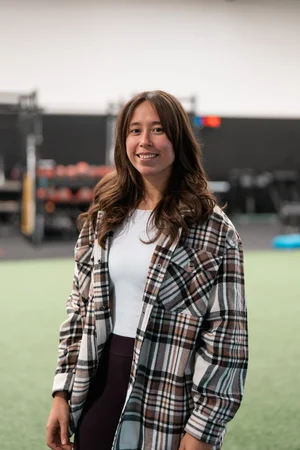
The last day of fifth grade
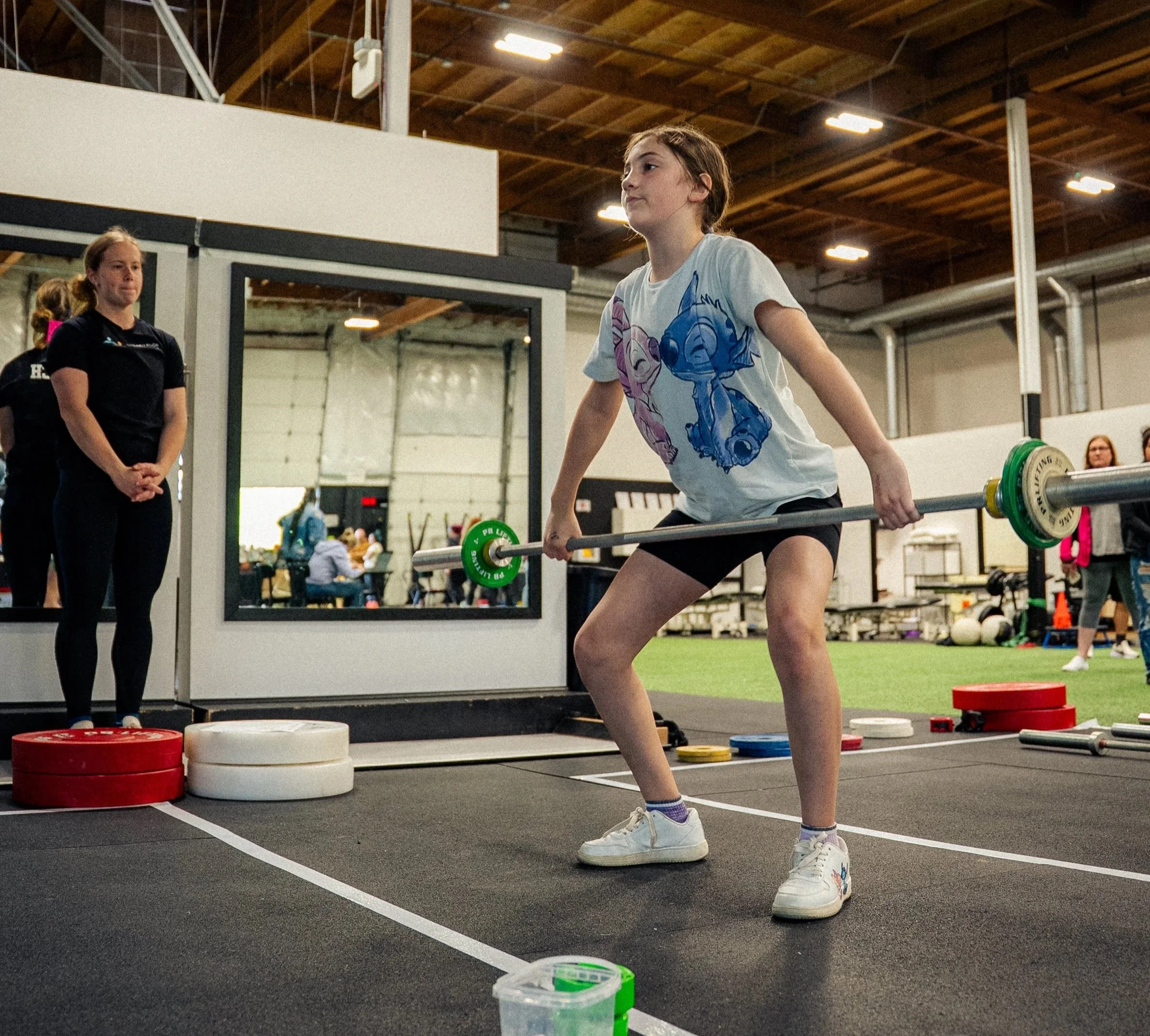
Picture a 10-year-old on the last day of AMIGOS class. For two, maybe three years, this has been her place. She knows the whiteboard by heart: value of the month, community circle question, skill of the day, workout, game. She knows her coach will notice when she finally gets her elbows up on a front squat. She knows that on a hard day at school, there is still one hour where someone is glad she showed up.
Then summer ends, and she walks into middle school.
The building is bigger. The friend groups shift. Sports teams start making cuts, club fees show up, and the kids who "aren't sporty" quietly stop moving. Phones fill the hours between 3 and 6 p.m. And for the first time in years, there is no AMIGOS waiting for her after the bell.
This is the moment we can't stop thinking about. Middle school is exactly when kids need a coach, a team, and a reason to move the most, and it is exactly when those things disappear for the families we serve. That is why bringing AMIGOS into middle schools is the heart of our three-year strategic plan.
The middle school cliff: what the national data says
The numbers tell the same story we see in our gyms. Somewhere between elementary and middle school, too many kids stop moving, and the support around them starts to disappear.
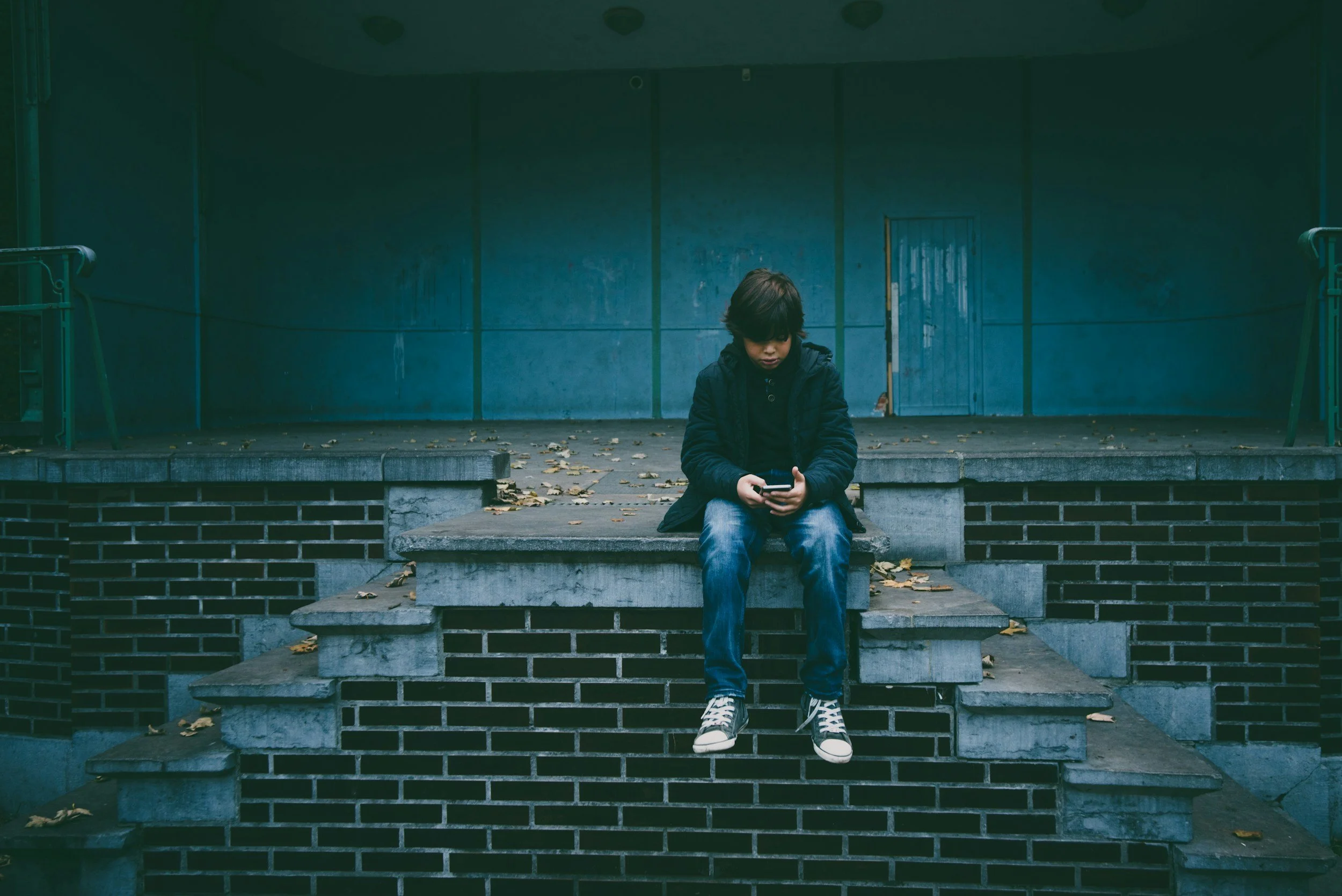
Movement drops by almost two-thirds. Among U.S. kids ages 6 to 11, 42% get the recommended 60 minutes of activity a day. By ages 12 to 17, that falls to just 15% (2022 U.S. Report Card on Physical Activity). Screens move in to fill the gap: only 12% of kids ages 12 to 19 stay at two hours of screen time or less.
Kids quit sports right as middle school begins. The average child plays a sport for less than three years and quits by age 11, most often because it stopped being fun (Aspen Institute Project Play). For low-income families, cost is the wall: kids from low-income homes quit sports because of cost at six times the rate of kids from high-income homes (Project Play). Only 23% of low-income kids play sports regularly, compared with 44% of high-income kids.
Middle school families want help and can't find it. Parents of nearly 6.7 million middle schoolers want an after-school program for their child, but 78% of those kids are left without one. That is 5.2 million middle schoolers, an all-time high (Afterschool Alliance, Dec. 2025). Unmet demand is highest for low-income families (54%), and cost is the top barrier (56%), followed by no safe way to get to and from a program (48%).
Movement protects mental health. Teen mental health is finally improving, but one in three high school students still felt persistently sad or hopeless in 2025, while daily physical activity did not budge and fewer students had daily PE (CDC, Sept. 2026). The CDC found that students who are active for an hour on five or more days a week report less sadness and hopelessness.
Parents already know this. 78% of middle school parents say after-school programs support their child's mental health, 83% say they help kids build positive friendships, and 77% say they keep kids safe.
Here in Oregon, the drop is just as real
Oregon's own students are telling us the same thing. The 2024 Oregon Student Health Survey asked more than 45,000 students across the state how they are doing (Oregon Health Authority). Between sixth and eighth grade:
Students who rate their mental health as only "fair" or "poor" rise from 22.9% to 30.8%
Students who felt sad or hopeless almost every day for two weeks or more rise from 22.4% to 27.3%
Students who seriously considered attempting suicide in the past year rise from 9.7% to 12.7%
Students who have an adult at school they can go to for help fall from 72.0% to 64.8%
Only about 27% of eighth graders are active 60 minutes every day
In just two years, the share of Oregon kids struggling with their mental health jumps by a third, and the share who have a trusted adult at school drops. By 11th grade, daily activity falls to 18%.
Oregon students also tell the state that mind and body are connected. A 2025 OHA report built with Oregon youth found that more than one in five eighth and 11th graders had unmet mental or physical health needs, and that the two rarely show up alone (OHA, Oct. 2025).
And the programs aren't there to catch them. Statewide, for every Oregon student enrolled in an after-school program, two more would join if one were available (OregonASK). That is roughly 221,000 Oregon kids waiting.
This is where AMIGOS lives. Our partner schools in Hillsboro, Beaverton, Aloha, and Cornelius serve families who feel these gaps first: the club fees, the rides that don't exist, the hours after school when no one is home yet.
What our families already know
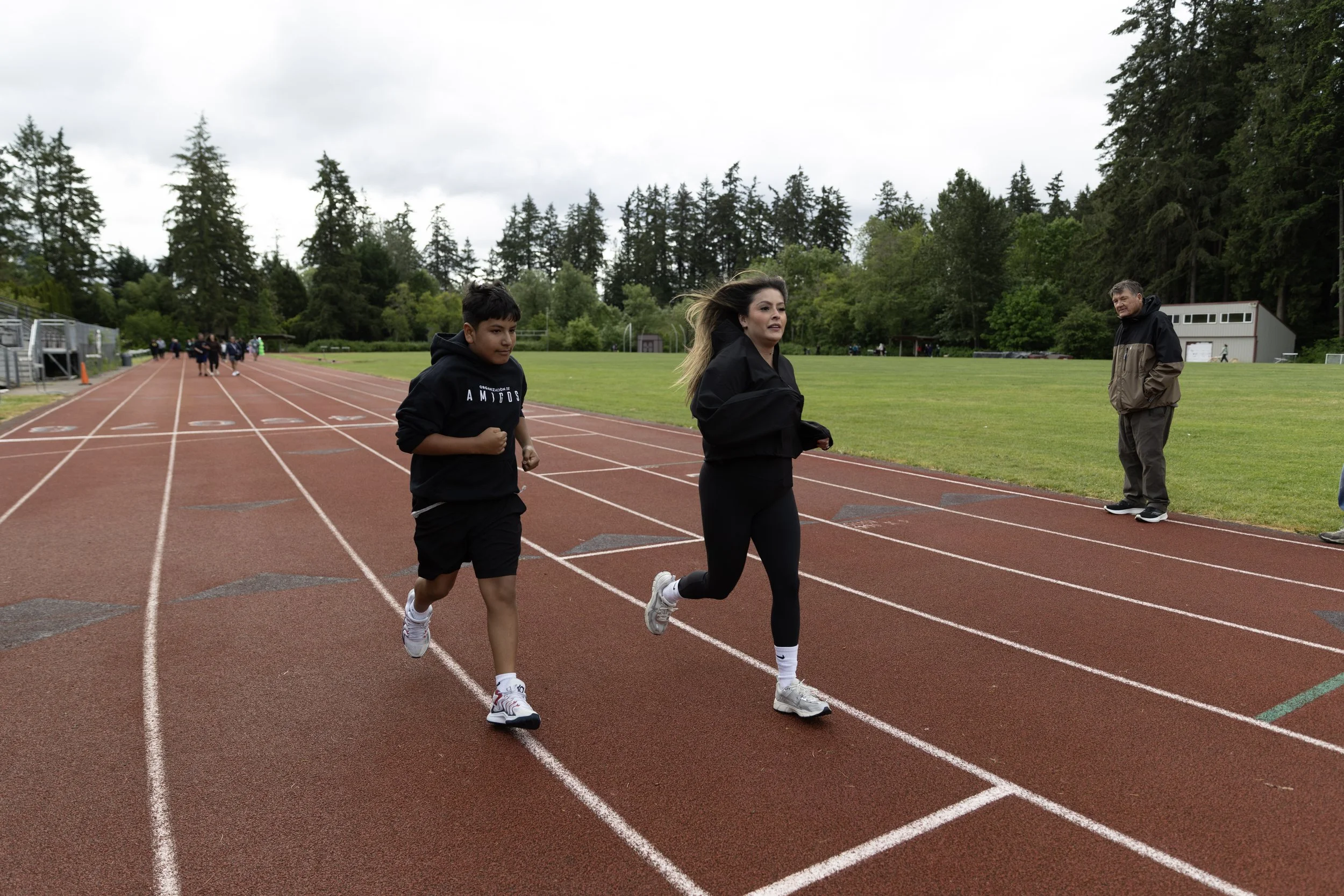
For four years, AMIGOS has brought free, school-based CrossFit and mentorship to about 150 students at seven partner schools across the Hillsboro and Beaverton School Districts. Our kids learn to squat, run, sprint, and lift safely with age-appropriate weights, all through games that make them love moving. But the part most people don't see is the heart of it: every class opens with a community circle, a value of the month, and a coach who knows each kid by name.
That is what parents notice. This fall, we asked AMIGOS families to share their stories. Of the eight who wrote back, seven said their child is more active and has healthier habits, six said their child is more confident, and five said their child is happier after school.
The mother of a sixth grader at Lincoln Street Elementary told us:
"My daughter didn't know if she was going to like this. I told her to try it even once, and it was good to see her there. She learned to be stronger mentally, to believe in herself, and to have more confidence. She decided to try again one more year because she liked it so much, and it taught her that everything is possible if you believe in yourself."
She added a line we can't stop repeating: "In this sport the real achievement is not to lift more kilos than the others, but to beat the bar that you yourself thought you could not lift."
Bianka, a Brookwood Elementary mom of two, shared:
"Eiza would always come home from CrossFit talking about how much fun she had. Her goal was to become a junior, and once she was given that opportunity, she became even more motivated and determined to keep improving and challenging herself."
And a Free Orchards Elementary parent wrote:
"Before this program, our son didn't really want to do much. Now he wants to pack healthy meals, and he will even put exercise videos on YouTube and do them along with it. It truly makes a difference in our children's lives. I wish this was a year-long program because he really looks forward to it!"
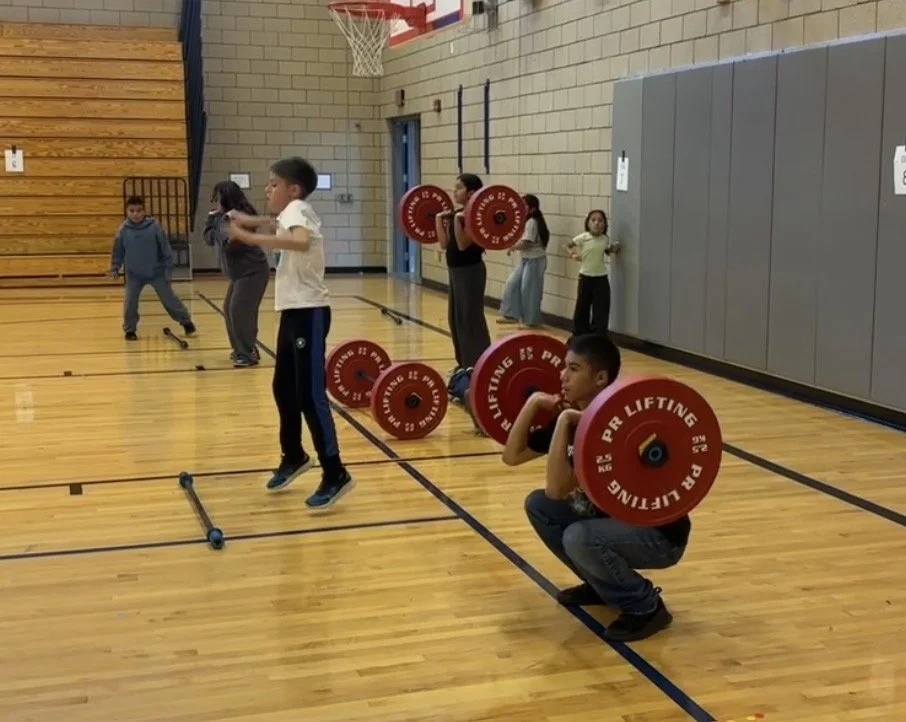
We also see it in our own classrooms. Some of our junior coaches are seventh graders who started with AMIGOS in second grade. They come back to help lead the younger kids because this is their place. Every one of them is proof that middle schoolers don't outgrow the need for a coach and a community. They just run out of places to find one.
Every parent who wrote to us wants the same thing for their child's next chapter. We want that for every middle schooler in our community.
Our plan: AMIGOS in middle school
Over the next three years, AMIGOS will grow from elementary into middle school, so the kids who grew up with us have a place to keep going. Our goal is to open one new middle school program each year from 2027 through 2029, starting with Brown Middle School in Hillsboro next fall. Three of our seven partner elementary schools feed into Brown, which means many of the kids we coach today will walk through its doors.
Middle school AMIGOS will build on what already works:
Real strength and conditioning. Safe barbell technique, conditioning, and the skills teens need to walk into any gym with confidence.
Mentorship that grows with them. Community circles, goal setting, and coaches who show up for kids through the hardest years of adolescence.
Leadership. Older students coaching younger ones, so our middle schoolers become role models.
Free and on campus. No fees, no rides needed, right after the bell, for the families who are shut out of club sports.
Launching a new site means equipment built for teenagers, trained coaches, and a full year of programming. $2,500 funds a part-time coach at one school for a full school year.
This Giving Tuesday, give them somewhere to go
This Giving Tuesday, our goal is to raise $10,000 by December 1 to give our middle school launch a head start. And right now, every dollar goes twice as far: Caryn and Chad Lawson of Bethany Optical will match every gift up to $2,500.
Here is what your gift can do:
$25 becomes $50 with the match and helps put a kid's first barbell in their hands
$100 becomes $200 toward equipment built for growing teenagers
$1,250 becomes $2,500, enough to fund a part-time coach at one school for a full year
Every $10 you give also enters you in our drawing for a Baby Gains wooden barbell, dumbbell, and kettlebell set.
That 10-year-old on the last day of fifth grade doesn't have to lose her coach, her team, or her reason to move. You can be the reason she has somewhere to go after the bell.
Give today at givebutter.com/amigos-giving-tuesday
Gracias, amigos. Fitness for life starts with you.
Sources
2022 U.S. Report Card on Physical Activity for Children and Youth
Aspen Institute Project Play: Kids quit most sports by age 11
Aspen Institute Project Play: Low-income kids 6 times more likely to quit sports due to costs
Afterschool Alliance: America After 3PM for Middle School Youth (2025)
OregonASK: State of Access and Equity of Afterschool in Oregon (2020)